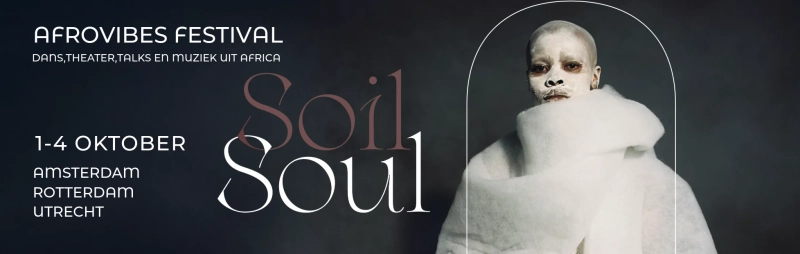
Afrovibes 2026

1 oktober – 4 oktober

Afrovibes Festival brengt actuele dans, theater en muziek van makers uit Afrika en de Afrikaanse diaspora in Nederland. Vanuit een Afrikaans perspectief geven zij artistieke vorm aan urgente vragen die wereldwijd spelen: over identiteit, verbondenheid, geschiedenis en de toekomst. Verhalen en perspectieven die vaak onderbelicht blijven, krijgen via eigenzinnige en prikkelende voorstellingen een podium.

SOIL | SOUL

Het festivalthema van Afrovibes 2026 is Soil | Soul. In een wereld waarin land steeds vaker inzet is van conflict en macht, onderzoeken Afrikaanse makers de betekenis van land, afkomst en spirituele verbondenheid. In veel Afrikaanse wereldbeelden is land meer dan territorium: het is een bron van herinneringen, voorouders, rituelen en identiteit. Wat betekent het om verbonden te zijn met de grond waarop je leeft? En wat gebeurt er als je wordt losgemaakt van je oorsprong?
Zie hier de volledige Afrovibes agenda op de Africaserver

Meer info & tickets op afrovibes.nl

Donderdag 16 Mei 2019

donderdag16.05
Van Steenis, Leiden—lezing en debat
The Mirror in the Ground: archaeology, photography and the making of an African disciplinary archive
Donderdag 16 Mei 2019 16:00 - 18:00

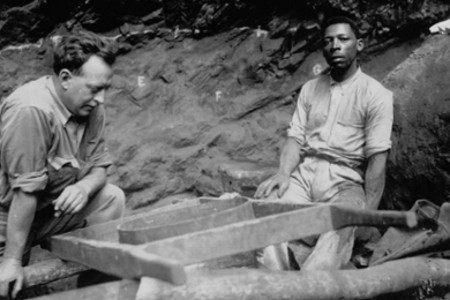
The Mirror in the Ground is a curated book of twelve short visual essays, drawing on photographs from the collection of John Goodwin, the South African archaeologist. Goodwin was a formative figure in the founding of South African (and African) archaeology. The collection relating to his life and work consists of manuscripts and typescripts, field notebooks, a voluminous correspondence, and so on. It also consists of thousands of photographic prints, negatives and glass plates. The photographs speak of a number of significant themes in the founding and "disciplining" of archaeology as a knowledge project in the first half of the twentieth century. These include the role of fieldwork and the emergence of a conception of the archaeological field, the role of so-called "native" labour in archaeology, the emergence of an enthusiastic amateur constituency, the evolution of fieldwork techniques, and so on. In examining the conjunction between archaeology and photography, I am particularly interested in the role of the visual imagination in the making of the discipline. More generally, I am interested in exploring what it means to approach intellectual history through the photographic image.

leidenuniv